

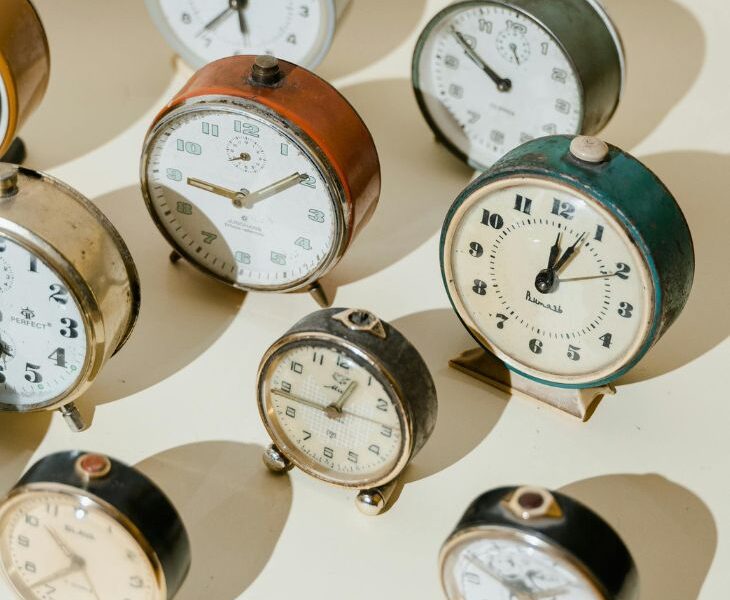
No, we cannot make the earth rotate at a more leisurely pace, or the seconds tick more slowly as they travel around the clock. But we can change how time feels.
Warm weather and longer days are upon us. I always want to make the spring and summer last longer, and maybe you are the same. And while we can’t actually add more hours into the day, we can change our experience so that the days feel longer. Not in a way that feels boring and endless, but in a way that feels richer and fuller.
We don’t experience time in the steady, constant way that it’s recorded by a clock. Our brain creates a sense of time based on what we pay attention to, the memories we store, and what we anticipate for the future.
Here’s how we can use that to our advantage:
Novelty
Routines are amazing and often necessary, but they do tend to compress time and make it feel like it’s sliding by. On the other hand, when you introduce something new, your brain shifts out of autopilot and starts paying attention. That’s why vacations or days when you have a family simcha can fly by, but feel long when you think back on them.
Even small forms of novelty can make a difference:
- Trying a new recipe
- Learning a new skill
- Changing how you approach a routine task
- Noticing details you usually overlook
Newness leaves more memory landmarks behind, and those landmarks make time feel fuller and slower.
Do something immersively
When we pay attention to our lives, we are less distracted, and those moments feel richer. To add more immersiveness into your life, try to cut down on multitasking, even just for a few minutes.
Do a little bit of nothing
When every moment is filled—thinking, planning, scrolling, reacting—you never have a chance to process everything that’s going on. This is part of why constant busyness makes time feel like it’s disappearing.
Neuroscience research shows that during rest, we activate the part of the brain that’s involved in reflection, memory consolidation, and integrating experiences.
Doing “nothing” might look like:
- Sitting quietly for a minute
- Taking a few slow breaths
- Looking out the window without input
- Letting your mind rest without organizing
These moments allow your brain to “catch up,” which makes time feel more grounded and less rushed.
Journaling slows down time
If you ever feel like the days blur into each other and all feel like one long mush, this tip is for you.
A daily log, weekly review, or even a few notes about the day can help separate one day from the next. Experiences become distinct and memories become easier to retrieve. This can shift your experience from “Where did the time go?” to “I can see where my time went.”
In your bullet journal, try out one the following prompts
- What did I do today?
- What went well this week?
- What am I looking forward to?